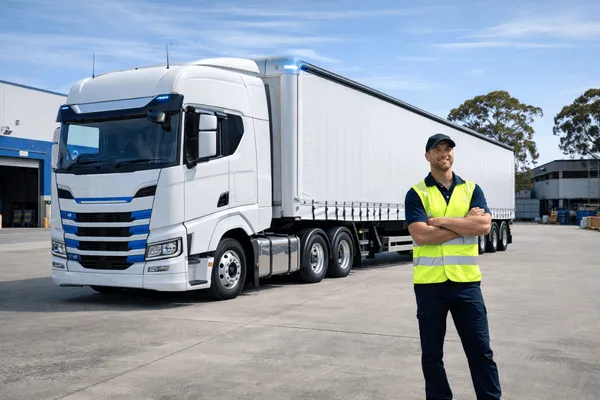
Truck Finance Australia – Complete Guide for ABN Holders, Owner Drivers & Transport Businesses
For owner drivers, transport operators and logistics businesses, a truck is not just a vehicle — it is the asset that produces income every day.
Lenders understand this, and truck finance for ABN holders is assessed under commercial lending rules, focusing on trading activity and bank statements rather than personal income measures.
This complete guide explains how truck finance works across prime movers, trailers and rigids, what lenders actually look for, how repayments are structured, and how many operators secure approval quickly when the application is presented clearly.
Who This Guide Is Written For
This guide is designed for:
Owner drivers purchasing their first truck
Subcontractors working under larger logistics or freight companies
Transport operators upgrading prime movers
Businesses adding additional trucks or trailers
Sole traders, partnerships, companies and trusts operating under an ABN
Businesses registered for GST
Operators who want to keep working capital inside the business instead of paying cash for trucks
If the truck generates income, this guide applies to you.
Why Truck Finance Is Very Different to Car Finance
To understand truck finance, you first need to understand how lenders see trucks.
A car is a personal, depreciating asset.
A truck is a commercial tool that generates revenue.
This single difference changes how lenders assess the risk of the loan.
Lenders know:
Without the truck, you can’t earn income
The truck is central to your business operations
The transport industry commonly finances assets
Bank statements often tell a clearer story than tax returns
Trucks and trailers retain strong resale value in the market
Because of this, commercial truck lending is often more flexible and faster than people expect.
Trucks and Trailers Lenders Are Comfortable Financing
Lenders in Australia regularly fund:
Prime movers
Rigid trucks
Tippers
Refrigerated trucks
Curtainsiders
Tray trucks
Flat top trailers
Tipper trailers
Refrigerated trailers
Skeletal trailers
Full truck and trailer combinations
Both new and used trucks are extremely common in commercial lending.
What Lenders Actually Look For in a Truck Finance Application
ABN and GST Registration
An active ABN and GST registration tells the lender you are genuinely operating a transport or contracting business.
Longer trading history improves options, but newer ABNs can still be considered.
Business Bank Statement Income
This is the most important part of the application.
Lenders review the last 3–6 months of statements to see:
Regular income deposits
Consistent work or contracts
Responsible account conduct
For many truck loans, this replaces the need for tax returns or financials.
Your Industry Experience
Experience as:
A driver
Subcontractor
Fleet operator
Logistics provider
Helps lenders understand your ability to generate income from the truck.
The Truck or Trailer Being Purchased
Lenders check:
Age
Purchase price
Dealer vs private sale
Suitability for the intended work
Credit History
This is considered, but strong business activity often outweighs minor past issues.
Documents Typically Required
Truck finance paperwork is often simpler than expected. You may only need:
Driver licence
ABN & GST details
3–6 months business bank statements
Truck or trailer invoice/details
Full financials are often not required.
How Truck Loan Repayments Are Structured
Truck loans are typically structured over 3 to 7 years, depending on:
Age of the truck
Purchase price
Business cash flow
Desired repayment level
Many operators choose to include a balloon payment at the end of the term. This reduces monthly repayments while the truck is generating income.
Why Balloon Payments Are Very Common in Truck Finance
A balloon payment is simply a lump sum left at the end of the loan term.
In personal car loans, balloons are less common. In truck finance, they are very normal.
This is because trucks behave differently to cars in the real world.
A prime mover or rigid truck that has been maintained properly still holds meaningful resale value after several years. Many operators also don’t keep the same truck for the entire loan term. They upgrade as contracts grow, workloads change, or better equipment becomes available.
By structuring the loan with a balloon:
Monthly repayments are kept lower
Cash flow is easier to manage
The truck pays for itself while you operate it
The balloon can be cleared when the truck is sold, traded, or refinanced
For many owner drivers, this structure makes far more sense than trying to pay the entire truck off with higher monthly repayments.
New Trucks vs Used Trucks – How Lenders View Them
Both new and used trucks are extremely common in commercial finance, but lenders apply slightly different thinking.
With new trucks, lenders are very comfortable offering:
Longer loan terms
Lower deposit requirements (often none)
Smoother approvals when purchased from dealers
With used trucks, lenders focus more closely on:
Age of the vehicle at the end of the loan term
Condition and kilometres
Whether the truck suits the type of haulage work
The important point is this: used trucks are not a problem. In fact, a large portion of truck finance in Australia involves quality used prime movers and rigids.
Prime Mover Finance vs Rigid Truck Finance (What Changes)
On paper, “truck finance is truck finance”. In practice, lenders often think a little differently depending on whether you’re buying a prime mover or a rigid.
With prime movers, lenders typically want to understand the nature of your work and consistency of income because prime movers are usually tied to linehaul, container work, and contracted transport. That doesn’t make approvals harder — it just means the lender wants a clear picture of how the truck will be utilised. A prime mover that’s matched to a steady work type is usually a comfortable asset for lenders.
With rigid trucks, the use case is often local delivery, metro freight, trade-related haulage, waste, tilt trays, tippers or specialised bodies. Lenders are usually very familiar with this category because it’s common for small operators and growing businesses. When a rigid clearly fits the business activity, approvals can be very straightforward.
The key point is simple: the best outcomes happen when the truck type clearly matches what you do and how you’re paid.
Trailer Finance in Australia (Skels, Flat Tops, Reefers and More)
Trailers are financed constantly in the transport industry, and they can be funded in a few different ways depending on the purchase and your setup.
Common trailer types lenders regularly finance include:
Skeletal trailers (skels) for container work
Flat tops and drop decks
Tippers
Refrigerated (reefer) trailers
Curtainsider trailers
Trailers are often financed:
as part of a truck + trailer package, where the truck is the main income-producing asset and the trailer supports it, or
as a standalone trailer purchase, particularly when you already have the towing vehicle and you’re expanding capacity.
In the real world, this usually shows up like this: you win a new contract that requires a skel or refrigerated capacity, and you need to add the trailer without draining cash flow. Lenders understand this and generally treat trailers as standard commercial assets when the rest of the application is clean and the asset details are clear.
Dealer Purchase vs Private Sale (What’s Faster and Why)
Both dealer and private purchases are possible, but the process differs.
A dealer purchase is often faster because:
invoices are standardised
vehicle details are clear
verification is simple
settlement processes are familiar
A private sale can still be funded, but delays usually come from basic admin issues — missing details, unclear ownership checks, or incomplete information about the asset. It’s not that lenders dislike private sales; it’s that private sales leave more room for uncertainty, and uncertainty slows approvals.
If speed matters, the single best thing you can do is ensure the truck details and paperwork are clean and complete upfront.
Is Zero Deposit Truck Finance Realistic?
For many operators, yes.
Because the truck is used to generate income, lenders often fund:
100% of the truck price
On-road costs
Trailers purchased at the same time
This surprises many first-time owner drivers who assume they will need to contribute significant cash upfront.
From a lender’s perspective, keeping your cash inside the business can actually make the application stronger than draining your reserves for a deposit.
How Rates and Fees Work (In Plain English)
Most operators want the same answer:
“What rate will I get?”
The honest answer is that truck finance pricing depends on a mix of factors, including:
the strength of bank statement income
trading history (how long you’ve been operating)
credit history and overall conduct
the truck’s age and type (prime mover vs rigid, specialised bodies, etc.)
deposit (if any) and overall loan structure
whether a balloon is used and how the term is set
That’s why two people buying similar trucks can end up with different outcomes — not because one lender is “better”, but because the overall risk profile is different.
The best approach is to treat rate as something you optimise, not something you guess. A well-presented application with clear income and sensible structure usually does better than a rushed application that raises questions.
How to Choose a Term and Balloon That Fits Real Cash Flow
This is where good broking matters, because it’s easy to pick a structure that looks affordable on paper but puts pressure on you later.
A sensible truck finance structure typically aims for:
repayments that are comfortably covered by your weekly/fortnightly income cycles
enough buffer for fuel, tyres, maintenance and downtime
a balloon level that’s realistic if you plan to sell, trade, or refinance at the end
Here’s how it plays out in real life:
An owner driver running hard weekly kilometres might choose a structure with manageable repayments and a balloon, knowing they’ll likely upgrade in a few years.
A small fleet operator might choose a more conservative structure to keep repayments steady while adding a second or third asset over time.
The goal is not “lowest repayment at all costs”. The goal is stable, predictable cash flow while the truck earns.
Real Approval Scenarios Lenders See Every Day
Truck finance approvals commonly occur in situations like:
An experienced driver leaves employment to start subcontracting under their own ABN and needs their first prime mover.
A transport operator wins a new contract and needs to add a refrigerated trailer to their setup.
An owner driver has had the same truck for years, it’s becoming unreliable, and they need to upgrade quickly to avoid downtime.
A small fleet operator wants to replace two older rigids with newer models to reduce maintenance and fuel costs.
These are not unusual or risky scenarios to lenders. They are everyday commercial lending situations.
Common Reasons Truck Applications Get Delayed
Most delays have nothing to do with approval strength.
They usually happen because:
Bank statements are missing pages
Income is hard to follow across accounts
The truck details are unclear
The application is mistakenly submitted as a personal vehicle loan
The purchase is rushed after paying a deposit before speaking to a broker
When these are avoided, truck approvals are often very fast.
Common Mistakes Owner Drivers Make (That Cost Time or Money)
This is where people get caught out — not because they aren’t financeable, but because the process is approached the wrong way.
Committing to the wrong truck too early
It’s common to fall in love with a deal, throw down a deposit, and then discover the truck is outside lender comfort zones (age, condition, or mismatch to work type). A quick check before you commit saves a lot of stress.
Mixing business income across multiple accounts without clarity
If income is spread across accounts, lenders can still assess it — but the application needs to present it clearly. Otherwise, you’ll get follow-up questions and delays.
Underestimating the impact of downtime
Lenders know trucks need maintenance. What they want to see is that your cash flow can handle it. A structure that leaves no buffer is where problems start.
Not aligning the loan structure to contract income
If your income is contract-based, seasonal, or variable, the repayment structure needs to leave breathing room. The best outcomes come from matching the finance to how you actually get paid.
GST, Tax and Cash Flow Considerations
Financing a truck can offer advantages such as:
Claiming GST on the purchase
Claiming interest and depreciation
Keeping working capital available for fuel, maintenance and wages
Predictable repayments that match business income
This is one of the key reasons most transport operators choose to finance rather than pay cash.
(Always confirm your situation with your accountant.)
Truck Finance for First-Time Owner Drivers
Many lenders are comfortable with first-time owner drivers when:
The applicant has industry experience
Bank statements show income from subcontracting or related work
The truck clearly matches the work being undertaken
You do not need to have owned a truck before to be approved.
Adding Trailers and Expanding Your Setup
After the first truck is financed and repayments are made consistently, adding trailers or upgrading equipment often becomes easier.
Lenders view repeat borrowers favourably because they have proven repayment history.
This is how many operators grow from one truck into small fleets over time.
What If Your ABN Is Under 12 Months Old?
A newer ABN does not automatically mean decline.
If you have:
Strong industry experience
Clear income in your bank statements
A truck that suits the work you are doing
There may still be options available.
Each application is assessed individually.
Preparing for a 24–48 Hour Truck Finance Approval
Approvals happen fastest when you have:
Driver licence ready
ABN & GST details
Last 3–6 months business bank statements (complete PDFs)
Clear truck or trailer invoice/details
A rough idea of monthly income
This preparation alone can reduce approval times dramatically.
Truck Finance vs Business Loans (Which One Makes Sense?)
Some operators ask whether they should just take a business loan instead of truck finance.
In many cases, truck finance is preferred because:
it’s designed specifically for vehicles and commercial assets
terms and structures often fit the asset life cycle better
the truck itself forms part of the security picture
A business loan can be useful in some scenarios (especially when timing is urgent or the asset is unusual), but for standard prime movers, rigids and trailers, dedicated truck finance is typically the cleaner fit.
Frequently Asked Questions
Can I finance a prime mover and trailer together?
Yes — this is common, especially when the combination matches a clear contract or work type.
Will lenders finance specialised bodies (tippers, tilt trays, reefers)?
Often yes, but asset details matter. The clearer the build and use case, the smoother the approval.
Can I upgrade trucks before the loan ends?
Yes. Many operators upgrade by selling/trading the truck and settling or refinancing the remaining balance.
Do I need a signed contract to get approved?
Not always. Consistent bank statement income can be enough, but clear work evidence helps in borderline cases.
What’s the fastest way to avoid back-and-forth?
Provide complete PDF statements, a clear invoice, and a short explanation of the work type the truck will be used for.
Can I finance a truck from a private seller?
Yes, with many lenders, provided the truck meets age and condition guidelines.
Can I refinance an existing truck loan?
Often yes, especially if your circumstances have improved.
How long can a truck loan term be?
Up to 7 years depending on the truck’s age.
Can trailers be included in the same loan?
Yes, very commonly.
Do I need to provide tax returns?
Often no. Bank statements are usually enough.
Does my credit score matter?
It matters, but business income is often more important.
Can I include on-road costs?
Yes.
Is zero deposit normal?
For many applications, yes.
Final Thoughts
Trucks, trailers and prime movers are income-producing assets, and lenders assess them very differently to personal vehicles. When your trading activity is clear and the asset matches your work, truck finance approvals are often more straightforward than operators expect.
Taking the time to understand how truck lending works before committing to a purchase can make the entire process smoother and faster.
If your business also relies on utes, vans or machinery, these guides may also be useful:
Business Vehicle Finance for ABN Holders – Complete Guide
Equipment & Machinery Finance – Complete Guide

